
Packaging
Centre Seal Pouches
One seam down the back — the cheapest printed pouch there is.
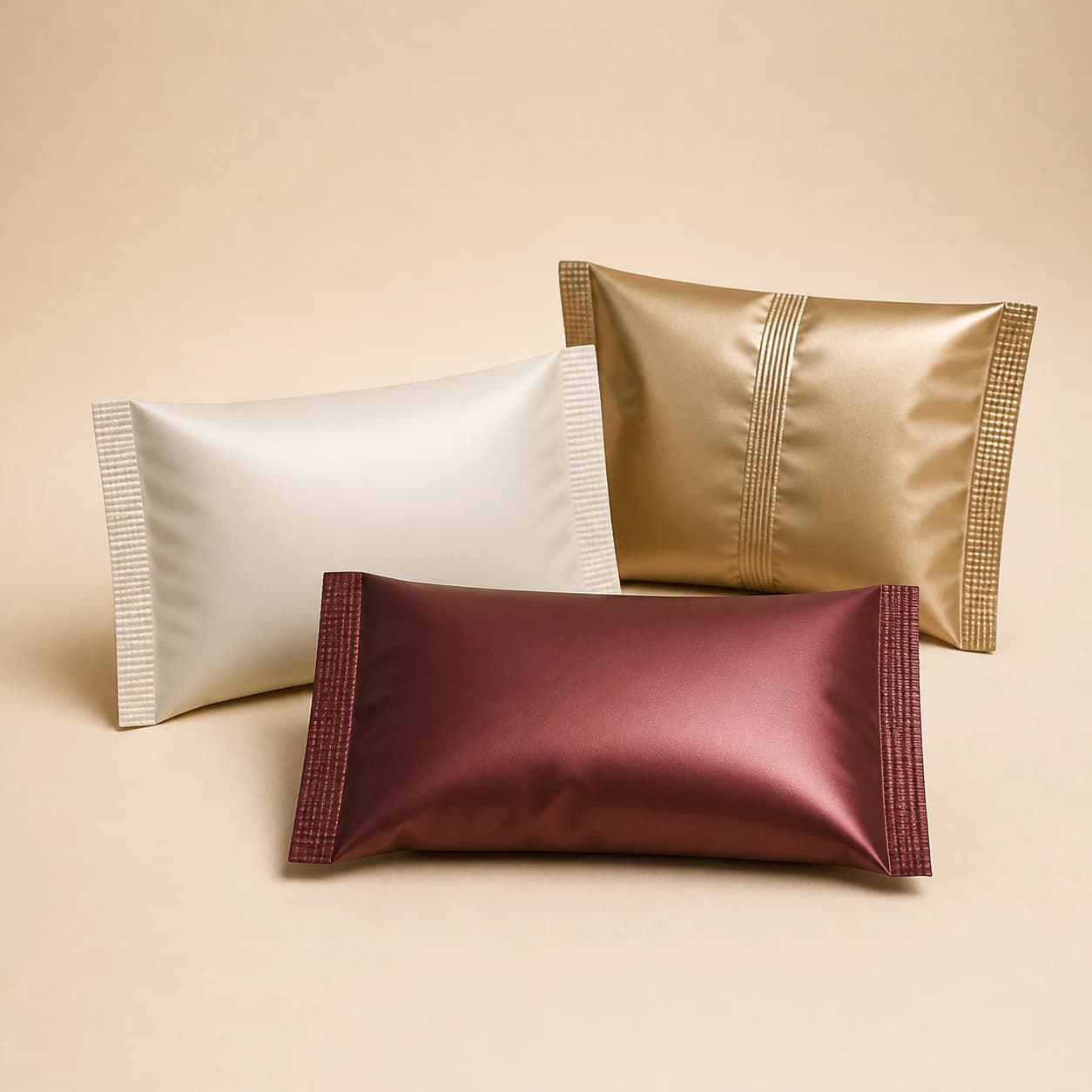
One seam down the back, sealed top and bottom. It is the simplest printed pouch there is and the cheapest per piece, which is why it is what biscuits, wafers and namkeen have been packed in for decades.
The build. PET/PE at 60 micron, gloss, printed up to six colours, medium barrier, with a tear notch. No gusset, no base fold, no zip. The pack lies flat and is opened once.
Why it is the cheapest. Less film per pack, one seam instead of three, and a construction that runs fast on a form-fill-seal line without stopping to fold anything. At volume the difference against a stand-up pouch is substantial, and for a product sold at a low unit price it is often the difference between a viable margin and none.
What you give up. It does not stand on a shelf. It has no reseal. The barrier is medium, which is right for a snack eaten within weeks and wrong for coffee or ground spice. If your product needs any of those three things, pay for a different format — a centre seal pouch chosen to save money on the wrong product just fails more cheaply.
Form-fill-seal. This is the natural format for an in-house FFS line, and it is available as reel stock rather than made pouches if you are filling your own. See printed rolls — the economics at volume are considerably better again.
Back seam placement. The seam runs down the centre of the back panel, which means your back-panel artwork has a fold through the middle of it. Nutrition tables and barcodes need to sit clear of it: a barcode across a seam will not scan reliably, and that is discovered at the till rather than at proof stage. We will flag it if your artwork puts one there.
Ordering. Minimum 5,000 pieces, lead time 15 working days. Suits biscuits, wafers, namkeen, confectionery and snacks. Food grade as standard.