
Packaging
Vacuum Pouches
For air-sensitive products packed under vacuum.
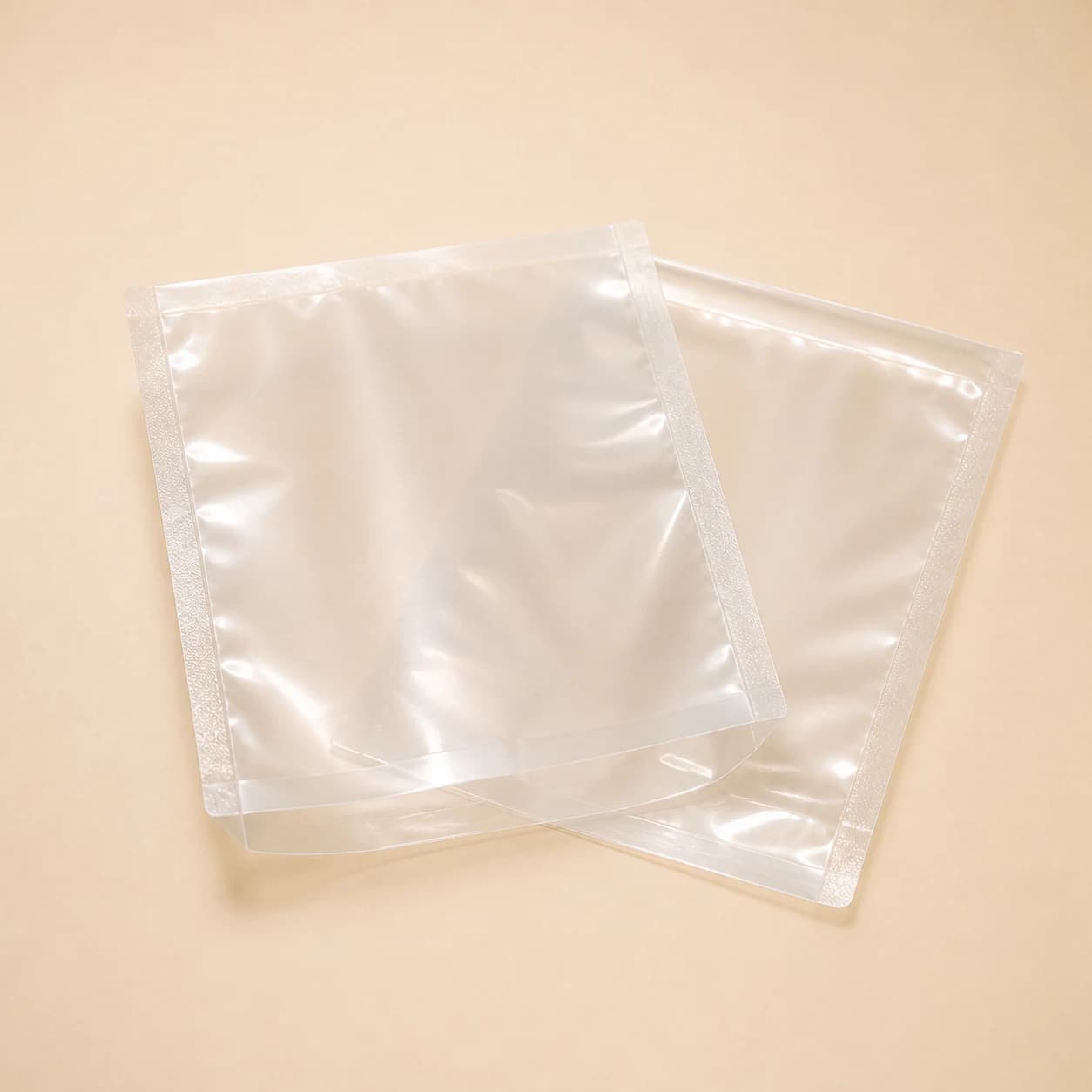
A vacuum pouch is not a stand-up pouch with the air sucked out. It is a different construction for a different job: nylon laminated to polyethylene, chosen because nylon resists puncture and holds its shape under the mechanical stress of a vacuum cycle.
The build. Nylon/PE at 100 micron, gloss, unprinted. High oxygen barrier. The pack is open on one edge and sealed on filling — there is no zip, because a resealable closure and a vacuum are mutually exclusive.
Why nylon. When you evacuate a pack, the film is pulled hard against whatever is inside it. A bone, a shell fragment or a frozen edge will go straight through ordinary PET/PE. Nylon stretches rather than splitting, which is why it is the standard for meat and fish and why we will not substitute a cheaper laminate for this application however tight the budget is.
Boil safe and freezer safe. These pouches survive both ends of the temperature range: sous-vide and reheating at one end, deep freeze at the other. That combination is what makes them useful for prepared and portioned food, not just raw product.
What it suits. Meat, cheese, fish, rice and frozen food. Vacuum packing extends shelf life by removing the oxygen that aerobic spoilage organisms need — it does not sterilise, and it does not make an unsafe product safe. Chilled and frozen storage rules still apply exactly as they did before. If you need a pack that goes into a steriliser with the food already sealed inside it, that is a retort pouch, not this.
Ordering. Minimum 1,000 pieces, lead time 12 working days. Supplied unprinted; brand these with a label, which is normal practice in this category because most vacuum packs are either sold from a counter or sit inside a printed carton.
Tell us the product, the fill weight and whether it is going into a freezer, a chiller or a water bath, and we will size it and confirm the film.