
Packaging
Side Gusset Bags
Folds down both sides, so the bag opens out as it fills.
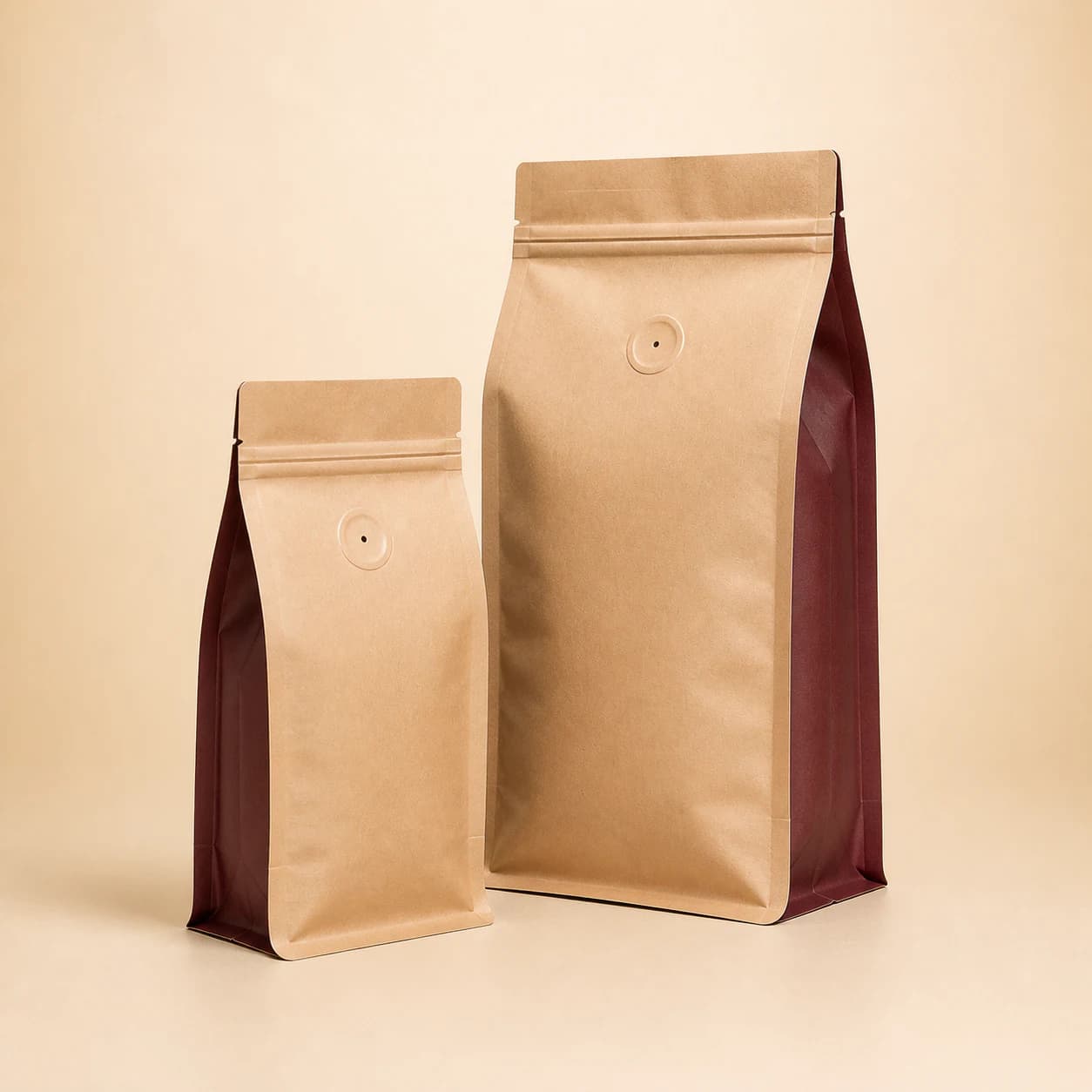
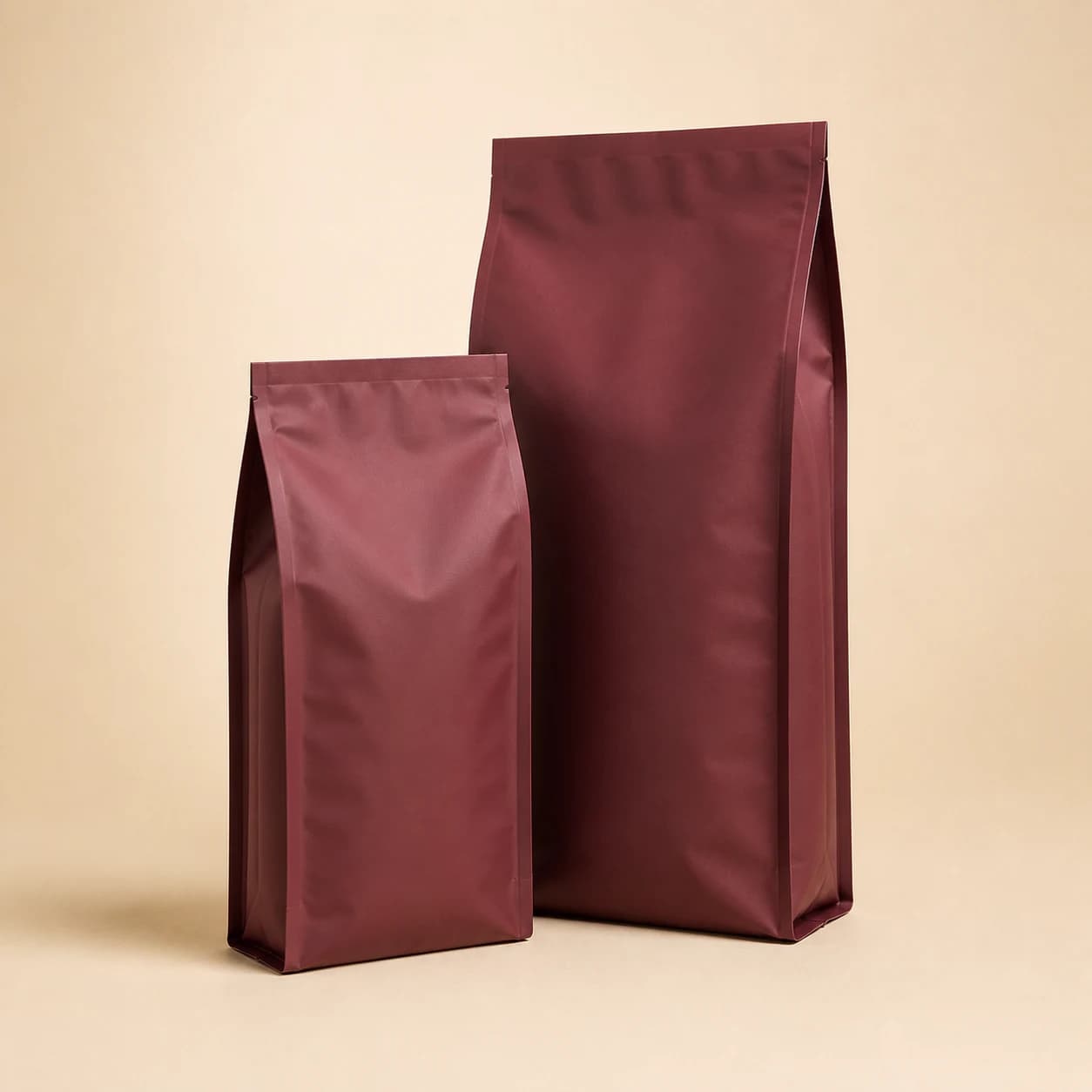
A side gusset bag folds inward down both sides, so a flat pack opens into a deep square-sectioned bag as it fills. It is the traditional coffee bag shape, and it remains the most efficient way to get a large volume into a pack with a small shelf footprint.
The two builds. PET/AL/PE at 145 micron has a true aluminium foil layer and a very high barrier — the choice for roasted beans and anything where oxygen is the enemy. PET/MET-PET/PE at 130 micron is metallised rather than foiled, a high barrier at a lower cost, suited to rice, flour, pulses and pet food.
The degassing valve. Freshly roasted coffee gives off carbon dioxide for days after roasting. Seal it in an airtight bag with no way out and the bag inflates and can burst; leave the bag open and oxygen gets in and stales the coffee. A one-way valve solves both: gas escapes, air does not enter. If you are packing coffee within a week of roast, specify the valve. If you are packing anything else, you do not need it and should not pay for it.
Tin tie. A folded metal strip along the top edge that the customer rolls down to reclose. It is the expected closure on a coffee bag and costs less than a zip. Both builds can take it, and one can be heat sealed instead if the pack will be opened once and emptied.
Ordering. Minimum 2,000 pieces on both builds, lead time 20 to 24 working days depending on the film and the number of colours. Printing runs up to eight colours, gloss or matte.
Sizing. A gusset bag's capacity is not obvious from its flat dimensions, because the gussets add volume that only appears when it is filled. Tell us the fill weight and the product's bulk density — 250 g of whole beans and 250 g of ground coffee need visibly different bags — and we will work back to the flat size rather than having you guess.