
Food
Namkeen
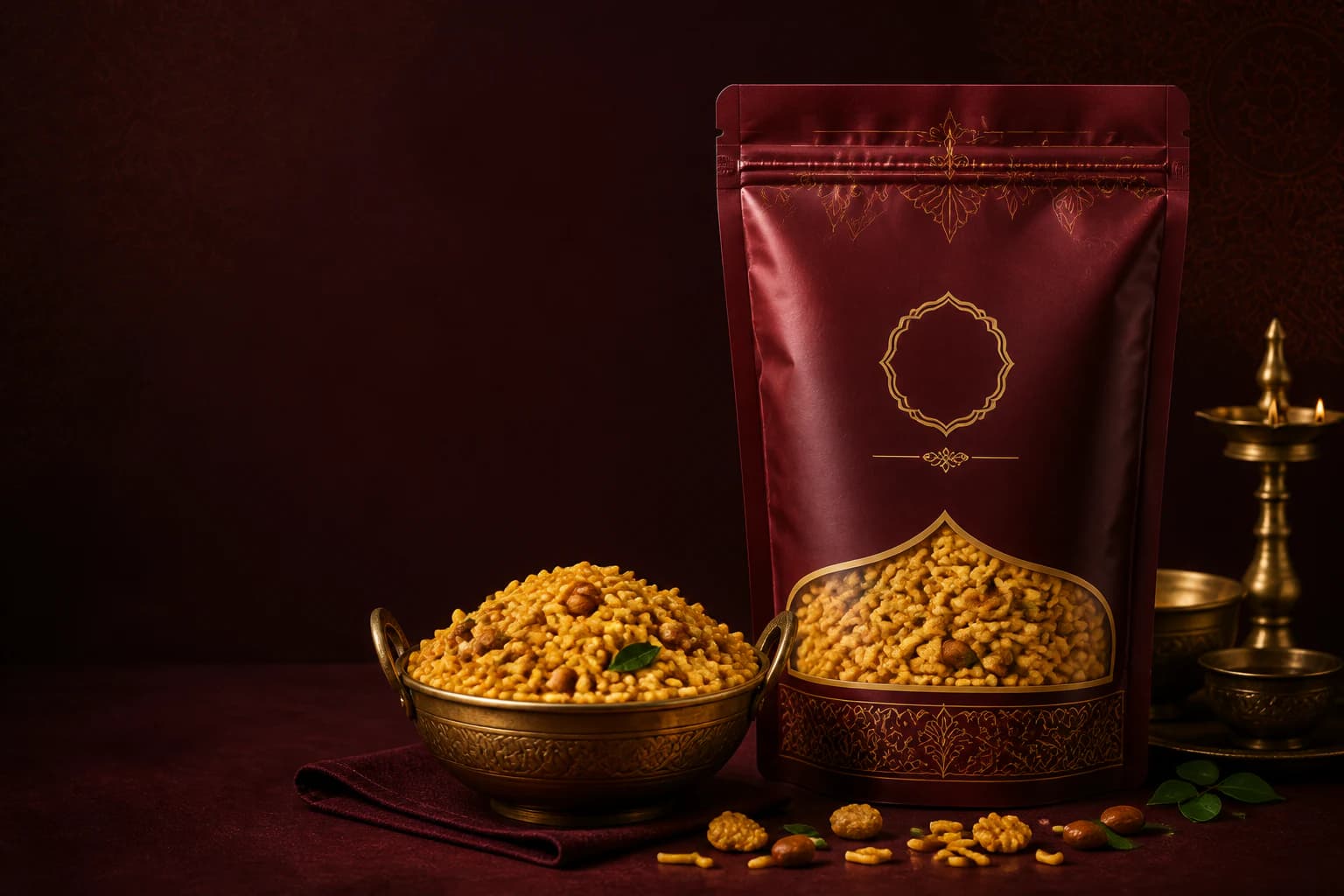
Nimki and dry savouries in resealable packs.
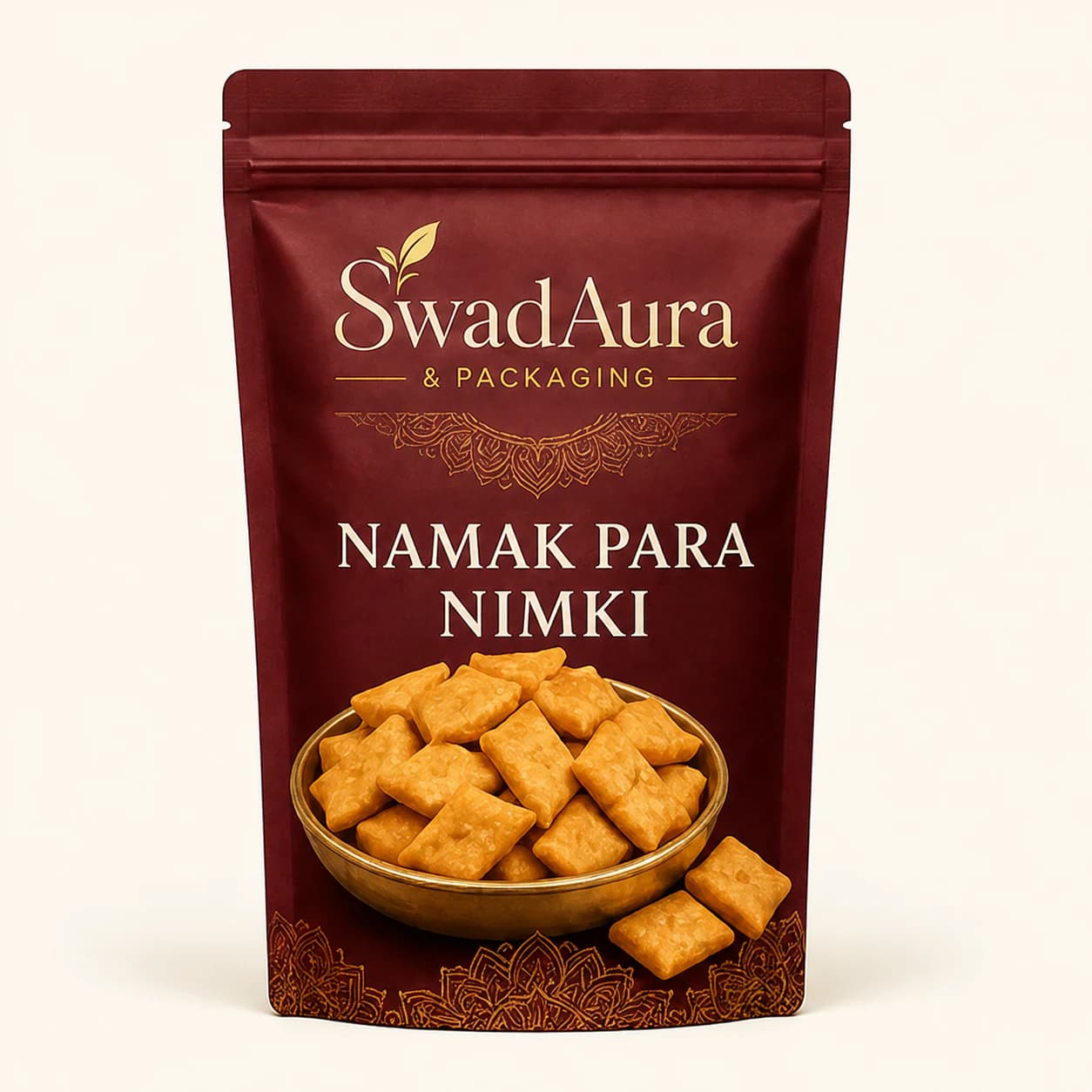
Nimki and dry savouries in resealable packs. Salt rather than sugar, fried rather than baked, and made for eating alongside tea rather than as a meal.
Namak Para, also called Nimki. Diamond-cut savoury crisps for chai time — nimki, the way it is made at home. Plain flour dough, often with ajwain worked through it, rolled thin, cut into diamonds and fried until it is properly crisp. It is the savoury half of the pair whose sweet half is shakkar para, and in most households the two are made in the same week and put out in the same tin.
Why it is diamond-cut. Practicality rather than decoration. Rolling a sheet and cutting it on the diagonal in both directions produces even pieces with no offcuts and nothing to re-roll — and re-rolled dough fries harder and unevenly. The shape is what you get when you waste nothing.
Sizes. 250 g and 500 g.
Eating it. With tea, which is not a suggestion so much as a description of what it is for. Nimki is dry, salty and crisp in a way that is designed against a hot sweet milky cup. It also travels well, which is why it turns up in tiffin boxes and on long train journeys.
Keeping it. Fried and dry, so it keeps for a long time if it is kept dry — and goes soft in a day if it is not. Humidity is the only real enemy. Reseal the pack, keep it closed between servings, and do not decant it into an open bowl in a damp kitchen and expect it to be the same tomorrow.
Small batches. Fried in small lots, so pieces vary a little in colour and in how hard they fry. Evenness is what a machine produces; this is not that.